
Let’s be honest. Moving house in Sydney is one of those things nobody actually looks forward to. You know it’s coming. You tell yourself you’ll start early. Then suddenly it’s two weeks out and you’re staring at a garage full of stuff wondering how you collected so much in the first place.
We get it. At Six Brothers Removalists, we’ve helped thousands of families pack up and settle into a new home across Sydney. From Bondi apartments to big family homes in Parramatta. We’ve seen every moving challenge you can imagine.
That’s why we built this moving checklist. Not the boring, copy-paste kind you find everywhere. This is a real, week-by-week guide built from 15+ years of moving Sydney families. It covers everything. Booking the right removalist. Packing fragile items without losing your mind. Sorting out utility connections so you don’t walk into a dark new place on day one.
Think of this checklist as your moving GPS. Without it, you might still get to your new home. But you’ll probably take a few wrong turns, waste time, and show up more stressed than you needed to be.
So grab a coffee. Bookmark this page. And let’s walk through your entire Sydney move, step by step.
Sydney Moving Checklist 2026 Summary

Why a Sydney Moving Checklist Matters More Than You Think
Here’s a question worth asking. Why do so many people wing it on moving day? They wouldn’t show up to a job interview without prep. They wouldn’t go on a road trip without checking the fuel. But moving house? Somehow that gets the ‘we’ll figure it out’ treatment.
And that’s where things go sideways. Moving in Sydney comes with its own set of challenges. Narrow streets in the inner west. Apartment buildings with strict booking windows. Parking permits you didn’t know you needed. Council rules that change from one suburb to the next.
A proper moving checklist keeps you on track. It takes a big, stressful task and breaks it into small, doable pieces. You stop guessing what’s next. You stop forgetting things. And you stop making those expensive last-minute mistakes, like hiring the first removalist you find because you ran out of time to compare quotes.
As the old saying goes, ‘fail to plan, plan to fail.’ That’s never more true than on moving day.
A solid checklist also helps you manage your moving budget. When you write down every task and expense in advance, you see the full picture. No surprise fees. No forgotten costs. Just a smooth, organised sydney move from start to finish.
Whether you’re moving locally within NSW or going interstate, this checklist will help you navigate every step. Let’s get into it.
Before You Start Planning Your Move
Before you pack a single item, you need a foundation. Think of this like building a house. You don’t start with the roof. You start with the ground. These four steps set up everything that comes after.
Set Your Move Date
Pick your moving day as early as possible. This one decision shapes everything else. When you hire movers. When you start packing. When you notify your landlord or settle on your new place.
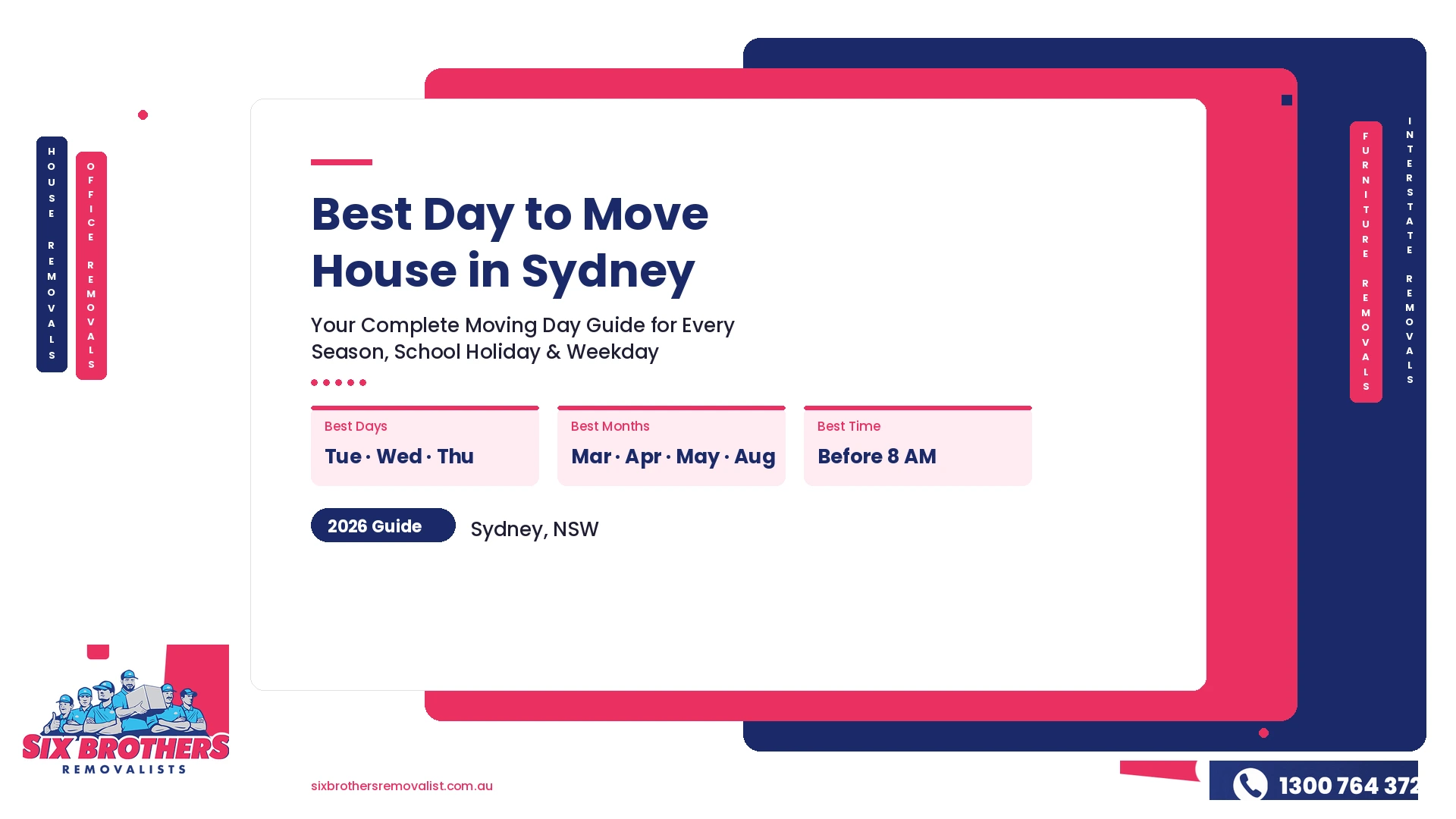
If you have flexibility, mid-week moves are usually cheaper. Sydney removalists tend to get booked out fast on weekends, especially during peak season from October to March. A Tuesday or Wednesday booking can save you real cash and give you more options. Also think about your suburb. If you’re moving out of a busy area, like Surry Hills or Newtown, weekday access is way easier. Less traffic. Fewer parking headaches. Faster loading.
Write down your move date. Put it in your phone. Share it with everyone involved. This is your anchor.
Build Your Moving Budget
Moving costs more than people expect. The truck hire is just the tip. You’ve also got packing materials, cleaning fees, connection charges for gas and electricity, parking permits, and maybe even storage if there’s a gap between leases.
Here’s a quick way to build your moving budget. List every expense you can think of. Then add 15% on top for the stuff you’ll forget. Trust us, there’s always something. Common expenses people miss include council permit fees for truck parking, bond cleaning at your old place, insurance for furniture in transit, and temporary storage if timings don’t line up.
Don’t forget about cash for tipping the movers if they do a great job. It’s not required, but it’s appreciated.
Create a Full Home Inventory
Walk through every room. Open every wardrobe, cupboard, and drawer. Write down what you actually own. This sounds tedious, but it’s one of the most important tasks on your checklist.
Your inventory helps in three big ways. First, it tells your removalist exactly what to expect so they can give you an accurate quote. Second, it helps you figure out what to declutter before packing. Third, if anything gets damaged during the move, you have a record.
Go room by room. List large furniture items like beds, couches, dining tables. Then note the smaller stuff. How many boxes of books? Kitchen appliances like the toaster, blender, microwave. Computer equipment. The pantry items you always forget about. Take photos as you go. Your phone is your best friend here. A quick picture of each room saves you from trying to remember what was in the back of that hall cupboard.
Compare Removalist Quotes
Get at least three quotes. That’s the minimum. Some people just go with the cheapest, but that’s risky. A low quote might mean fewer inclusions, less insurance, or inexperienced movers who take twice as long.
When you compare, look at the full picture. Does the quote include furniture disassembly? What about packing materials like bubble wrap and moving blankets? Is there an extra charge for stairs or long carries from the truck to your front door? At Six Brothers Removalists, we provide transparent quotes with no hidden fees. Call us on 1300 764 372 or email info@sixbrothersremovalist.com.au for a free estimate tailored to your sydney move.
A good quote should list every item being moved, the number of movers, the estimated time, and exactly what’s included. If it doesn’t, ask.
How to Book the Right Sydney Removalist
Choosing a removalist is like choosing a mechanic. You want someone who knows what they’re doing, won’t overcharge, and actually shows up when they say they will. Here’s what to check before you sign a booking.
Compare What’s Included in the Quote
Not all removalist quotes are created equal. One company might include furniture blankets, trolleys, and shrink wrap. Another might charge extra for each of those items. Some include a certain number of free moving boxes. Others don’t.
Before you hire any removalist, ask for a full list of inclusions. Do they supply packing materials? Will they disassemble and reassemble your bed frames and furniture? Is there a minimum booking time? What happens if the job runs over the estimate? The cheapest quote on paper might end up being the most expensive once the extras stack up. Read every line. Ask every question. This is your belonging we’re talking about. You want it handled right.
Check Reviews and Reputation
Online reviews tell you what the company won’t. Look for patterns, not just star ratings. Do customers mention the movers being on time? Careful with furniture? Friendly and professional?
Check Google, Facebook, and platforms like ProductReview. A company with hundreds of reviews and a solid average is generally a safer bet than one with five perfect scores from accounts that look a bit dodgy. Six Brothers Removalists is proud of our track record across Sydney. Our reviews speak for themselves. Real families sharing real experiences with our team, from the initial booking through to unloading the last item at the new place.
Ask About Moving Insurance
This is the item most people skip, and it’s the one that matters most when something goes wrong. Insurance protects your belongings during transit. Without it, you’re on your own if something breaks.
Ask your removalist what insurance they carry. Is it basic transit insurance or full coverage? Does it cover your furniture, fragile items, and appliances? What’s the claims process look like? Some companies offer insurance as part of the package. Others treat it as an add-on. Either way, make sure you understand what’s covered before moving day. If you have expensive art, glass cabinets, or a piano, you may want additional cover.
Insurance isn’t exciting. But having it is a relief when you need it. And that peace of mind is worth every cent.
Confirm Access at Both Locations
Sydney apartments are notorious for tricky access. Many buildings require a booking through the strata or building manager. Some have dedicated loading docks. Others limit moves to certain hours.
Check access at your old place and your new home. Is there a lift? What’s the clearance in the garage? Do you need a council parking permit for the truck to park on the street? In some suburbs, you’ll need a permit from the local council days in advance. Parramatta, City of Sydney, and North Sydney all have their own rules. Don’t assume. Call the council. Confirm the details. Tell your removalist exactly what they’ll be walking into.
Nothing slows down a move like a truck that can’t park or movers standing in the hallway waiting for a lift that’s booked by someone else.
Your Sydney Moving Checklist: 4 to 8 Weeks Before Moving
You’ve done the groundwork. Now it’s time to start ticking off the bigger tasks. This is where you shift from planning to doing.
Book Your Movers or Truck
If you haven’t locked in your booking yet, now is the time. Good Sydney removalists book out fast, especially during summer months and end-of-month weekends.
Confirm the date, start time, and total cost. Get it in writing. Ask about their cancellation policy. Make sure you have the team size you need. A two-bedroom apartment in the inner city is different from a four-bedroom house in the western suburbs. If you’re doing a DIY move, book the truck now too. Compare hire rates, check what size you need based on your inventory, and confirm the pick-up and drop-off times.
Six Brothers Removalists makes booking easy. Give us a call at 1300 764 372. We’ll walk you through your options and lock in a date that works for your schedule.
Declutter Before You Pack
Why would you pack, carry, and unpack stuff you don’t even want? Decluttering before you move saves time, money, and energy. Every item you get rid of is one less item to pack, load, transport, and unpack at your new home.
Start with the easy stuff. Go through your wardrobe and pull out anything you haven’t worn in a year. Check the garage for tools or equipment gathering dust. Open the pantry. Half those pantry items are probably expired anyway.
Here’s what to do with the stuff you don’t want. Donate what’s still usable to local op shops or Vinnies. Sell quality items on Facebook Marketplace or Gumtree. Dispose of broken or expired items responsibly. Your local council in NSW usually offers free or cheap bin collection for bulky stuff. Check your suburb’s council website for dates.
Some people hire a skip bin and do one big purge. Others tackle one room at a time over a couple of weekends. Either way, decluttering is your best friend. It makes the rest of the move lighter. Literally and mentally.
Notify Your Utility Providers
You don’t want to arrive at your new home and find the electricity is off and the gas isn’t connected. Start notifying your utility providers at least four weeks before your move date.
Here’s what to arrange. Electricity. Gas. Water. Internet and phone. Each provider has a different process. Some let you do it online. Others want a phone call. Get on it early because connection wait times can be long, especially for internet in some Sydney suburbs. You can use platforms like Energy Made Easy to compare electricity and gas plans for your new place. It’s a government-run site, so the info is solid.
Pro tip. Schedule disconnection at the old place for the day after you move out. That way you still have lights and power while you do your final clean. Schedule connection at the new home for the day before you arrive so everything is ready.
Notify Schools, Work, and Key Contacts
If you’ve got kids, let their school know about the move as early as possible. If you’re changing schools, start the enrolment process now. NSW schools can have waitlists, and you don’t want to be scrambling last minute.
Let your employer know your new address too. Payroll, tax records, emergency contact info. It all needs updating. Notify your GP, dentist, vet if you have a pet, and any regular service providers. If you’re with a local gym or community group, let them know you’re heading off. It’s the kind of thing that slips through the cracks if you don’t put it on the checklist.
If you have a pet, this is also the time to plan how they’ll travel. Some pets get stressed on moving day. Consider having a friend mind them or booking them into a pet-friendly space while the chaos is happening.
Your Sydney Moving Checklist: 2 to 4 Weeks Before Packing
The countdown is on. This is when things start to feel real. Boxes show up. Rooms get messy. And you realize just how much stuff you actually own. Deep breath. You’ve got this.
Collect Your Packing Supplies
Don’t wait until the night before to hunt for boxes. Gather your packing materials early so you can pack at a steady pace instead of a panicked rush.
What you’ll need. Sturdy cardboard boxes in a mix of sizes. Small boxes for heavy items like books. Medium boxes for kitchenware and clothes. Large boxes for bedding, towels, and lighter items. You’ll also want bubble wrap for fragile items and glass. Packing tape. Markers for labelling. And maybe some wardrobe boxes for hanging clothes.
Where to get free moving boxes. Ask your local retailer or supermarket. Check Facebook Marketplace for people giving away second-hand boxes after their own move. Some removalists, including Six Brothers Removalists, can supply packing materials as part of your booking.
Bubble wrap is essential for anything breakable. Plates, glasses, mirrors, picture frames. Don’t skimp on it. A roll of bubble wrap costs a few dollars. Replacing a smashed wine glass set costs a lot more.
Start Packing Room by Room
Here’s the golden rule of packing. Start with the rooms you use least. Guest bedroom. Garage. Storage cupboards. Leave the kitchen and bathroom for last because you’ll need those items right up until moving day.
Pack one room at a time. It’s tempting to bounce around, but trust us, working through one space before moving to the next keeps everything organised. You’ll know exactly what’s packed and what’s still left. Use small boxes for heavy items. Books in a big box will destroy your back and the box. Wrap fragile items individually with bubble wrap. Fill empty spaces in boxes with towels, bedding, or scrunched newspaper so things don’t shift during the drive.
Pack your bag of essentials separately. More on that in a minute. But the short version. Anything you’ll need within the first 24 hours at your new home should stay with you, not buried in a box on the truck.
Label Every Box Clearly
This step takes thirty seconds per box. And it saves you hours of frustration when you arrive at your new place.
Write the room name on every box. ‘Kitchen’, ‘Master Bedroom’, ‘Kids Room’. Add a short note about what’s inside. ‘Pots and pans’. ‘Winter clothes’. ‘Books and files’. Use a thick marker so it’s easy to read at a glance. Mark fragile items clearly on the top and sides. This tells the movers to handle with extra care. If a box has glass or delicate appliances, make it obvious.
Some people use colour-coded labels or stickers. One colour per room. It sounds extra, but it makes unpacking at the new home way faster. The movers can drop each box in the right room without asking you fifty times.
Update Your Address Everywhere
This one takes longer than you think. You need to change your address with more places than you’d expect. Start a list and work through it over a couple of weeks. The essentials. Australia Post mail redirection. This catches most letters for up to 12 months while you update everything else. Set it up online. It takes about five minutes.
Then update your address with banks and financial providers. Health insurance. Car insurance. Phone provider. Any subscription services that deliver to your door. Your employer’s payroll system. Medicare and MyGov. If you’re registered to vote, update your electoral address through the AEC website. It’s quick and easy.
Don’t forget about online shopping platforms too. Amazon, eBay, any delivery apps. Nothing’s more annoying than a package showing up at your old place three weeks after you’ve moved.
Your Sydney Moving Checklist: 1 Week Before Moving Day
One week out. This is crunch time. Most of the heavy lifting is done. But there are a few essential tasks that need your attention now to make sure moving day goes off without a hitch.

Confirm Every Detail with Your Removalist
Call your removalist and confirm everything. Date. Time. Address for pick-up and delivery. Number of movers. Truck size. Any special items like a piano, pool table, or oversized furniture that need extra care.
Confirm parking access at both locations. If you booked a council permit, make sure it’s approved. Remind the building manager at your apartment about the lift booking. This quick phone call prevents so many problems. It takes five minutes and gives you real peace of mind heading into the final stretch.
Prepare Your Appliances for the Move
Large appliances need special prep. Your fridge should be defrosted at least 24 hours before the move. Unplug it, leave the door open, and put towels down to catch the melt. Moving a fridge with water inside is a recipe for damage and a wet truck.
Disconnect your washing machine. Secure the drum with transit bolts if you have them. Drain any leftover water from the hoses.
For smaller appliances like the toaster, kettle, or microwave, clean them out and pack them in boxes with bubble wrap. Wrap cords neatly. Don’t just toss them in a bag. Cords get tangled and damaged that way. If you have a computer, back up important data before the move. Pack the tower and monitor in their original boxes if you still have them. If not, wrap them in blankets and mark the box as fragile.
Pack Your “Essentials Box”
This is the most important box you’ll pack. It stays with you. Not on the truck. Not in the back of someone else’s car. With you.
What goes in it? Think about what you’ll need for the first night at your new home. Toilet paper. Phone charger. Basic toiletries. A change of clothes. Towels. Bedding for the first night. Snacks and water. A basic first aid kit. Any medications you take daily.
Also keep your important documents in this bag. Lease agreements. ID. Passports. Birth certificates. Insurance paperwork. Keep all of these with you, not in a box on the truck. If you have kids, pack a separate bag with their essentials. Favourite toy, snacks, a change of clothes, and something to keep them entertained. Same goes for your pet. Pack their food, water bowl, leash, and favourite blanket.
Secure Your Valuables
Jewellery, cash, laptops, external hard drives, and important documents should never go on the truck. Transport these yourself in your own vehicle.
If you have valuable artwork or antiques, consider getting them professionally packed. Standard moving boxes and bubble wrap might not cut it for a signed painting or vintage glass cabinet. Take photos of valuable furniture and items before the movers arrive. This gives you a clear record of their condition pre-move. If anything gets damaged, you’ll have evidence for your insurance claim.
Bonus Packing Tips for a Stress-Free Sydney Move
Packing is where most people lose time and energy. These tips come from years of watching Sydney families pack and move. Learn from their wins and their mistakes.

How to Pack Fragile Items Without Damage
Fragile items need extra love. We’re talking about your wine glasses, china plates, picture frames, mirrors, and anything made of glass. Here’s the thing. Most damage happens because people pack in a rush. They throw stuff into boxes, stack things too high, and skip the bubble wrap.
For plates, stand them upright in the box like records. Don’t stack them flat. Wrap each plate in bubble wrap or packing paper. Place a layer of scrunched newspaper at the bottom and top of the box. Fill every gap so nothing moves.
For glasses, wrap each one individually. Pack them upside down in the box with the heaviest items at the bottom. Use towels between layers for extra cushion. Label the box FRAGILE on every side. Mirrors and artwork need special care. Use corner protectors or bubble wrap the edges. Place them in a flat picture box or between two pieces of cardboard taped together. Never lay them flat in the truck. Stand them upright against a wall or furniture piece.
How to Pack Your Kitchen Like a Pro
The kitchen is the hardest room to pack. There are so many shapes, sizes, and breakable items crammed into a small space. Start early and give yourself at least a full weekend for the kitchen alone.
Begin with the items you rarely use. The special occasion plates. The blender that only comes out for smoothie week. The slow cooker sitting in the back of the cupboard. Pack those first. Leave out one set of essentials until the last day. One plate, one bowl, one mug, one set of cutlery, and one pan. You’ll still need to eat before the movers arrive. Pack these last or toss them in your essentials box.
For knives, use blade guards or wrap them in thick towels. Tape the towel shut so nothing slides out. Don’t just throw them loose in a box. Someone is going to reach in and regret it. Empty the pantry completely. Check expiry dates. Donate canned items that are still good. Dispose of anything past its date. Spices lose their flavour over time anyway, so moving day is a great excuse to start fresh at the new home.
Tips for Moving Furniture Safely
Big furniture is where DIY moves often go wrong. A couch might fit through the door at a certain angle. But get it wrong and you’re scratching the doorframe, denting the wall, or hurting your back.
Disassemble what you can. Bed frames, dining tables, bookshelves. Take them apart. Bag the screws and bolts in a zip-lock bag and tape it to the item so you don’t lose the hardware. Wrap furniture in moving blankets or old sheets. This protects against scratches during loading and transit. Use stretch wrap around drawers and doors so they don’t swing open during the ride.
Measure your doorways and hallways at the new place before moving day. That gorgeous dining table might not fit through the front door. Better to know now than when the movers are standing in the hallway with it over their heads.
If you’re in an apartment, check the lift dimensions. Some lifts can’t fit a king-size mattress. Your removalist may need to use the stairs, which takes longer and could cost more. Know this in advance so there are no surprises.
Moving with Kids and Pets
Moving day is stressful for adults. For kids and pets, it can be confusing and overwhelming. Plan ahead to keep them comfortable.
If possible, arrange for a friend or family member to look after young kids on moving day. The house will be chaotic with movers coming and going, boxes stacked everywhere, and doors propped open. It’s safer and calmer for everyone if the little ones are somewhere fun. For older kids, give them a job. Let them pack their own room. Put them in charge of labelling their boxes. It gives them a sense of control during a time that can feel unsettling.
Pets feel the stress too. Cats can bolt out of open doors. Dogs get anxious when their routine is disrupted. Keep your pet in a quiet room away from the action on moving day. Or better yet, arrange for them to stay with a friend, at a pet daycare, or at a pet-friendly facility until you’re settled at the new place.
At the new home, set up your pet’s space first. Put their bed, food, and water bowl in a familiar spot. This helps them adjust faster.
Sydney Moving Checklist for Moving Day
Today is the big day. Everything you’ve planned for comes down to this. The good news? If you’ve followed this checklist, you’re in great shape. Here’s how to make sure the day goes smooth.
Do a Final Walk-Through Inspection
Before the movers start loading, walk through your entire home. Open every cupboard. Check every shelf. Look inside the garage, laundry, and under the stairs. People leave behind more items than you’d think.
Common things left behind. Stuff in the garage rafters. Items in the garden shed. Hooks behind doors. Things stored on top of wardobes. Light fittings you own. Curtain rods. If you’re renting, take photos of every room. Document the condition of walls, floors, carpets, and fixtures. These photos protect you during the bond return process.
Check the letterbox one last time. Redirect anything you find and make a mental note to follow up on your Australia Post mail redirection.
Take Final Meter Readings
Read and photograph your electricity, gas, and water meters on moving day. Send these readings to your utility providers so you only pay for what you actually used.
Without this step, your final bill might be estimated. And estimated bills are almost never in your favour. A quick photo on your phone takes two seconds and could save you money. Keep the meter photos in a folder on your phone. You might need them later if there’s a billing dispute.
Complete Your Final Clean
If you’re renting, a thorough clean is essential for getting your bond back. Most NSW landlords expect the place to be returned in the same condition, minus fair wear and tear.
Some people hire a professional bond cleaner. It costs a bit, but it saves time and comes with a guarantee. If you’re doing it yourself, focus on the kitchen, bathrooms, oven, and carpets. These are the areas that trip people up in the final inspection. Clean the inside of every cupboard. Wipe down the window sills. Sweep the garage. Pull out the bin and clean around where it sat. Don’t forget light fixtures and ceiling fans. They collect dust like nobody’s business.
If you own the property, you still want to leave it clean for the new owners. Or at least leave it in a state you’d be happy to walk into yourself.
Secure Access and Hand Over Keys
Lock every window and door. Make sure the property is secure before you leave for the last time. Return all keys, remotes, access cards, and garage openers to your landlord or real estate agent. Get a receipt or written confirmation that you’ve returned everything. This protects you if there’s a dispute later.
At your new home, collect all keys and test every lock. Check the garage door. Test the alarm system if there is one. Change the locks if you want that extra layer of security. You never know who had keys before you.
Sydney Moving Checklist After Moving House
You’re in. The truck is gone. Boxes are everywhere. But the job isn’t quite done. These post-move tasks help you settle in properly and avoid those annoying admin headaches that sneak up on you weeks later.

Update Your Driver’s Licence and Vehicle Registration
In NSW, you’re legally required to update your driver’s licence address within 14 days of moving. You can do this through Service NSW online, in person, or over the phone. Same goes for your vehicle registration. If you own a car, update the rego details through Service NSW. It’s quick. Takes about five minutes online.
If you’re moving interstate, you may need to transfer your licence and registration to NSW within three months. Check the Service NSW website for current rules on transferring from another state.
Update Your Electoral Roll Address
This is a legal requirement in Australia. Once you’ve moved, update your electoral roll details through the AEC website. It takes about two minutes.
If you don’t update it, you might get fined for not voting in future elections. Or worse, your vote might not count because you’re enrolled at the wrong address. It’s easy to forget, but add it to your checklist and get it done in the first week.
Confirm All Utilities Are Connected
On your first day, test everything. Turn on the lights. Run the hot water. Check the gas stove. Make sure the internet is working. Sometimes connections don’t go through as planned, and the earlier you catch it, the faster it gets fixed. If something isn’t working, call the provider straight away. Most utility companies have priority teams for new connections. Don’t just wait and hope it fixes itself.
Keep all your confirmation emails and booking reference numbers in one place. A simple folder on your phone or computer works great. You’ll need these if anything goes wrong with the connection or billing.
Update Subscriptions and Delivery Addresses
This is the one that catches everyone out. You’ve updated the big stuff. But three weeks later, a meal kit shows up at your old address. Or your favourite magazine ends up in someone else’s letterbox.
Go through every subscription and delivery service you use. Meal kits. Streaming boxes. Magazine deliveries. Amazon. eBay. Chemist Warehouse online. Even your local coffee subscription if you’re that kind of person. Update your address on every platform you use. It’s boring. But it’s one of those small tasks that prevents a lot of annoyance down the track.
Also, check your auto-renewal services. Some subscriptions bill to a card linked to your old address. Updating the billing address keeps things running smooth.
Settling Into Your New Home: The First Week
You’re in. The chaos is behind you. Now comes the part that actually feels good. Setting up your new home and making it yours.
Unpack in the Right Order
Don’t try to unpack everything in one day. You’ll burn out. Start with the rooms that matter most and work outward.
First, set up the beds. After a long moving day, you need a proper sleep. Unpack your bedding, pillows, and towels. Next, unpack the kitchen. You’ll need to eat. Get the kettle going, unpack the plates, and put away the fridge items first. Then tackle the bathroom. Toiletries, towels, shower curtain if needed. These three spaces cover your basic needs. Everything else can wait a day or two.
Unpack one room at a time. Break down each box as you finish it. Flatten them and stack them in the garage or hallway. This keeps the new place from feeling like a cardboard warehouse.
Check Your New Home for Issues
In the first week, do a proper check of your new place. Test every tap, every light switch, every power point. Open and close every window. Flush every toilet. Run the dishwasher. Turn on the oven.
If you’re renting, report any issues to your landlord or property manager within the first few days. Document everything in writing. Take photos of anything that was already damaged when you moved in. This protects you at the end of the lease. Check smoke alarms. Make sure they work. Your safety at the new home is priority number one.
Get to Know Your New Suburb
Take a walk around your new suburb. Find the closest supermarket, pharmacy, park, and public transport stop. If you’ve got kids, scope out the local playground. Introduce yourself to the neighbours. A quick hello goes a long way toward feeling at home.
Look up your new council website. Find out which day your bin collection runs. Check if your area has green waste collection. Find the nearest recycling centre for electronics and hazardous items. Register with a local GP and dentist if you’ve moved far from your old ones. If you have a pet, find a nearby vet. These are the small things that make your new place feel like home faster.
Your Quick-Reference Sydney Moving Checklist Summary
Here’s a condensed version you can screenshot or print. Use this alongside the full guide above to track your progress.
8+ Weeks Out: Set move date. Build budget. Create inventory. Get 3+ removalist quotes. Compare inclusions and insurance.
4 to 8 Weeks Out: Book your removalist or truck. Start decluttering. Notify utility providers about disconnection and reconnection. Inform schools, work, and GP. Arrange pet care for moving day.
2 to 4 Weeks Out: Collect packing materials and bubble wrap. Start packing room by room. Label every box. Set up Australia Post mail redirection. Update address with banks and insurance.
1 Week Out: Confirm booking with removalist. Defrost fridge. Prepare appliances. Pack essentials box with bedding, towels, and important documents. Secure valuables for personal transport.
Moving Day: Final walk-through. Take meter readings. Complete final clean. Hand over keys. Supervise loading and unloading at new home.
After the Move: Update driver licence and rego with Service NSW. Update electoral roll. Confirm all utilities are live. Update subscriptions and delivery addresses. Unpack room by room.
Make Your Move Easier with Six Brothers Removalists
Moving house doesn’t have to feel like climbing a mountain. With the right plan, the right team, and a solid checklist, your Sydney move can actually feel pretty manageable.
That’s where Six Brothers Removalists comes in. We’ve been helping Sydney families move for over 15 years. From single-item furniture delivery to full house moves across every suburb in NSW, we’ve done it all. Our team handles your belongings like they’re our own.
Here’s what you get when you book with us:
Experienced, professional movers who arrive on time.
Transparent pricing with no hidden fees.
Furniture protection with premium blankets and wrapping.
Full insurance coverage for your peace of mind.
Packing supplies and packing services available.
Local moves, interstate moves, and storage solutions.
Ready to make your move? Call Six Brothers Removalists on 1300 764 372. Email us at info@sixbrothersremovalist.com.au. Or visit us at Suite 1 Level 5, 58-60 Macquarie St, Parramatta NSW 2150.
Let’s get you into your new home. The right way.
Sydney Moving Checklist 2026: How to Book Movers & Pack Your House Stress-Free | Six Brothers Removalists Podcast
Frequently Asked Questions About Moving in Sydney
How far in advance should I book a removalist in Sydney?
Book at least 4 to 6 weeks in advance. During peak season, from October to March, booking earlier is even better. Sydney removalists fill up fast on weekends and end of month dates.
How much does it cost to hire movers in Sydney?
Costs vary based on the size of your home, distance, and inclusions. A two-bedroom apartment move locally typically costs between $400 and $900. Larger homes with more furniture cost more. Always compare at least three quotes to get a fair price.
Do I need a council permit for a moving truck in Sydney?
In many suburbs, yes. Council areas like City of Sydney, Parramatta, and North Sydney require permits for trucks parked on the street. Apply at least a week in advance through your local council website.
What should I pack in my essentials box?
Phone charger, toiletries, a change of clothes, medications, snacks, water, towels, bedding, important documents, and basic cleaning supplies. Keep this box with you on moving day, not on the truck.
Can I get free moving boxes in Sydney?
Yes. Check Facebook Marketplace, ask at your local Bunnings or Woolworths, or look for people giving away used boxes on Gumtree. Some removalists also supply free moving boxes as part of the booking.
How do I update my address after moving in NSW?
Start with Australia Post mail redirection. Then update Service NSW for your driver licence and rego. Update the AEC for your electoral roll. Then work through banks, insurance providers, and subscription services.
What’s the best day of the week to move in Sydney?
Mid-week moves, Tuesday through Thursday, are typically cheaper and easier to book. Weekends and end of month are peak times with higher rates and busier streets.
Should I get moving insurance?
Yes. Even careful movers can have an accident. Insurance covers your furniture, appliances, and fragile items during transit. Ask your removalist what insurance they offer and consider additional cover for high-value belongings.
How do I dispose of large items I don’t want to move?
Contact your local council in NSW. Most councils offer free or low-cost bulky item collection. You can also book a skip bin, donate to charity shops, or sell items on Facebook Marketplace or Gumtree. For electronics and hazardous waste, check your council website for designated drop-off points.
What happens if it rains on moving day?
Professional removalists like Six Brothers Removalists come prepared for all weather. They use furniture blankets, plastic wrap, and covered trucks to protect your belongings. If you’re doing a DIY move, have tarps and plastic sheeting ready. Cover furniture and boxes while loading. Rain shouldn’t stop your move but it does require extra care.
Can I move on a public holiday in Sydney?
Some removalists offer public holiday services but expect to pay a higher rate. Availability is also more limited. If you can avoid public holidays, you’ll save money and have more flexibility with your booking.
How long does a typical Sydney house move take?
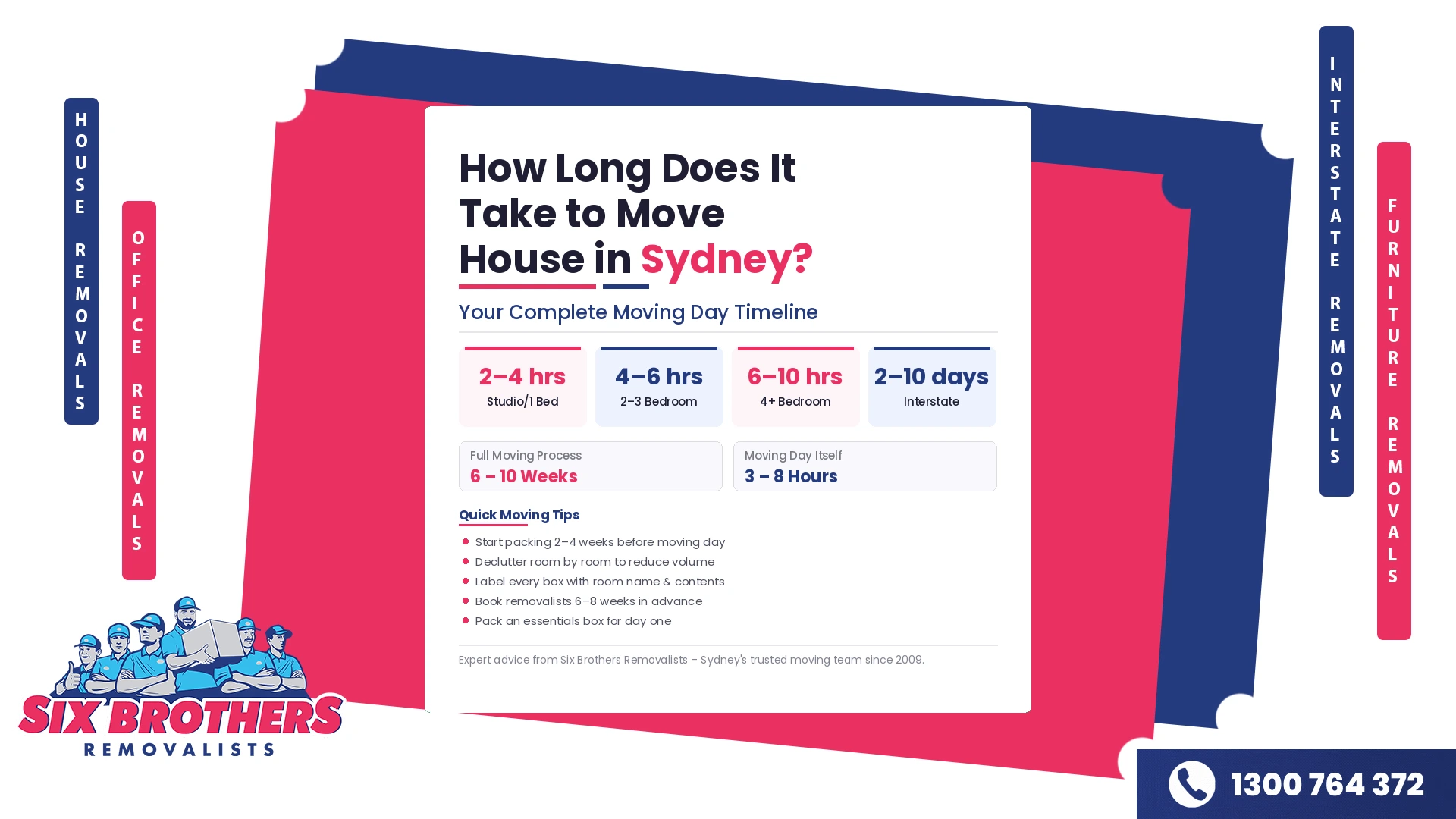
A two-bedroom apartment usually takes 3 to 5 hours. A three-bedroom house can take 5 to 8 hours. Larger homes with lots of furniture or tricky access can take longer. Your removalist should give you a time estimate during the quoting process.
What items can’t removalists transport?
Most removalists won’t move hazardous materials like paint, chemicals, gas bottles, or flammable liquids. Plants, perishable food, and live animals are also excluded. Check with your removalist about any items that need special arrangements.